
By Dr. Fayyaz Ahmed
Heat stroke is a serious medical condition rather than a disease itself. When it occurs, it can affect many organs of the body, including the brain. If immediate medical attention is not provided, it may become life-threatening. Older adults, young children, and women are generally more vulnerable to heat-related illnesses because they may be less able to cope with extreme temperatures.
Spending long hours in the sun during the summer can lead to dehydration, which increases the risk of heat stroke. Affected individuals may experience a high body temperature, flushed skin, headache, dizziness, nausea, vomiting, and low blood pressure. In severe cases, confusion or loss of consciousness may occur.
If someone shows signs of heat stroke, they should be moved immediately to a cool and shaded place with good ventilation. Remove unnecessary clothing and help lower the body temperature by placing a cold, wet cloth or towel on the head, neck, and chest. If the person is conscious and able to drink, provide cool water or a drink containing sugar and salts. Seek medical assistance as soon as possible.
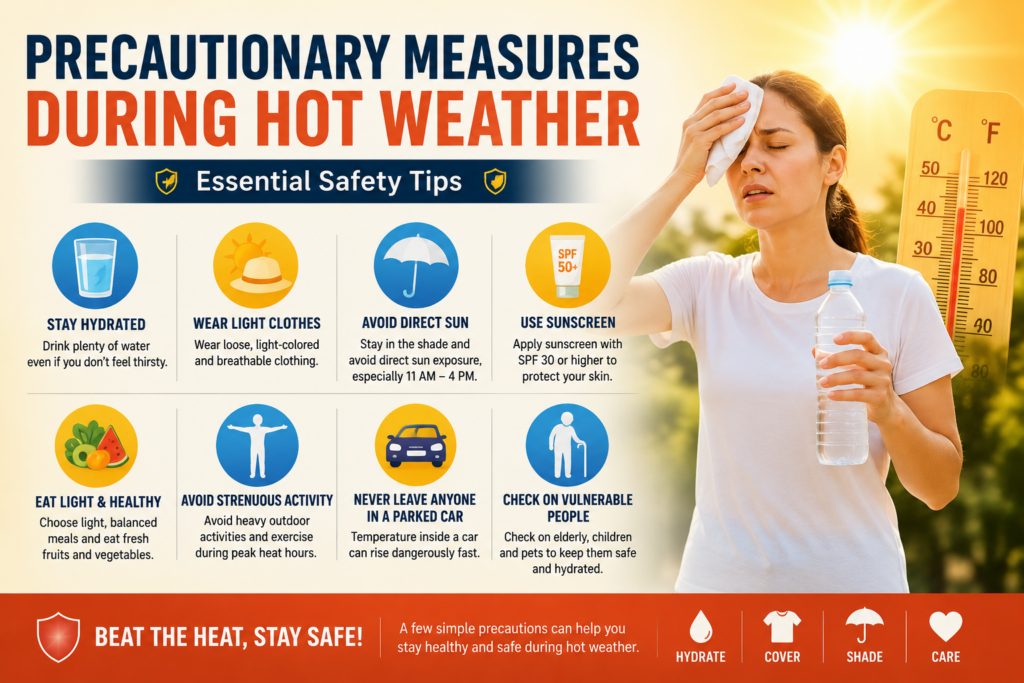
During periods of extreme heat, it is advisable to remain in cool and shaded areas and avoid unnecessary outdoor activities. If going outside is unavoidable, wear a cap or cover your head with a cloth to protect yourself from direct sunlight. Loose, lightweight, and light-colored clothing is recommended during the summer season.
Planting more trees in neighborhoods and communities can help improve the environment and provide shade. Trees absorb carbon dioxide and release oxygen, which contributes to cleaner air and helps reduce the effects of rising temperatures.
To stay healthy in hot weather, drink plenty of water and other healthy fluids to prevent dehydration. Eat fresh fruits and light meals, and avoid excessive consumption of spicy and oily foods. Whenever possible, avoid outdoor activities between 11:00 a.m. and 4:00 p.m., when temperatures are usually at their highest. Taking regular showers and keeping the body cool can also help prevent heat-related illnesses.
By taking simple precautions and staying hydrated, we can protect ourselves and our families from the harmful effects of extreme heat and enjoy a safer and healthier summer season.