
Dr. Fawzia Saeed
In today’s psycho-psychological and mechanical age, psychological illnesses are common. Because our nerves sometimes get so tired while fighting with daily problems that we are worried in search of peace, and while searching for peace, we become more troubled. Just look at illnesses, all of these are gifts of this hectic life.
These psychological illnesses have a very bad effect on our body. Women and men who complain that their faces are covered in spots are all the result of nervous breakdowns. Most people ignore it, but we feel these illnesses at the age of thirty to forty, while these illnesses have started much earlier.
The medicines that doctors prescribe may show results within a few days, but they cannot eradicate these diseases from the root.
These psychological illnesses are self-created. They include anxiety disorders.
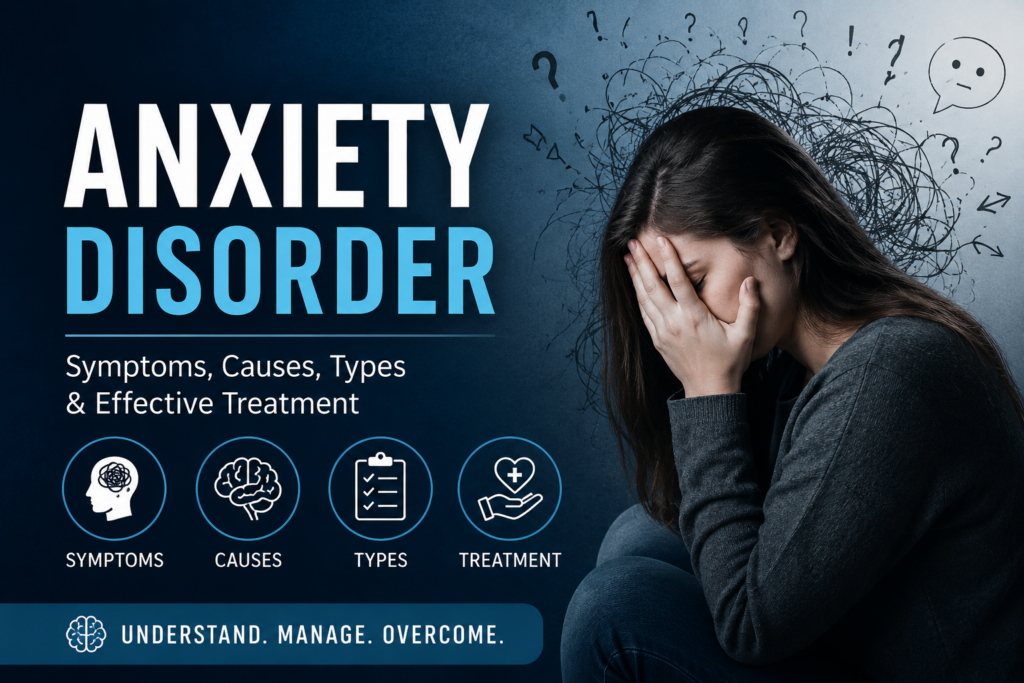
Anxiety disorders are a collection of mental and psychological problems in which the patient becomes a victim of worry, fear, and delusion. Anxiety actually arises from thinking about the future, while fear is related to the reaction to recent events.
These types of thoughts can cause various physical symptoms such as sweating, rapid heartbeat, and trembling due to fear. Anxiety disorders can be of many types. For example, generalized anxiety disorder or general complaint of anxiety, some specific phobias i.e. fear, social anxiety or fear, separation anxiety and worry, fear of crowds and fear caused by an accident or trauma, etc.
Most people also have more than one anxiety disorder. According to one theory, if anxiety is very low, it is not a bad thing, but a good thing because the hormonal response caused by anxiety is beneficial because this response allows a person to face threats in a better way. According to researchers, this situation tells a person that there is a potential threat and ensures that every effort is made to avoid it and protect themselves.
The causes of the mental and psychological disorders described include both hereditary and environmental factors. Although the symptoms of all anxiety disorders vary, there are some symptoms that are common to all these disorders. The patient feels nervous, fearful, and anxious. Anxiety patients usually have sleep disorders, for example, some patients do not sleep at all and some sleep a lot.
The patient usually cannot sit still and is not able to remain still. The patient’s hands and feet remain cold. They sweat constantly. The sense of touch in the hands and feet is impaired and there is a tingling sensation in their hands and feet. Sometimes the patient has difficulty breathing. The patient complains of heart palpitations. Dry mouth is common, and some patients complain of constant nausea. The patient’s muscles tense up. The patient’s head keeps spinning, causing him to feel dizzy while standing, sitting, and lying down.